Source Farmhouse Sofa Side Table for Living Room Hotel Bedroom
Find 30 farmhouse sofa side table options from verified suppliers. Compare prices, materials, and customization features for living rooms, hotels, and bedrooms.
Key considerations
Products List


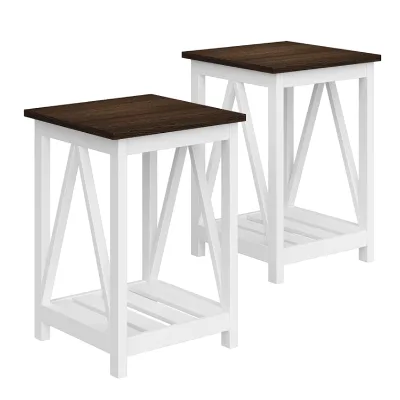
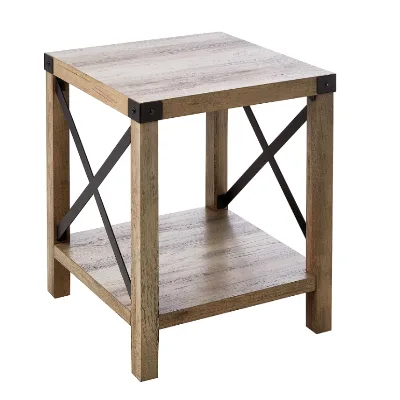


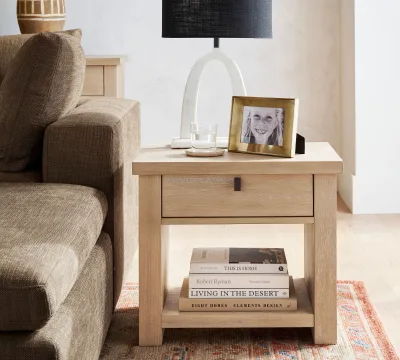


Comprehensive Sourcing Guide
Strategic Sourcing Guide for Farmhouse Sofa Side Tables
The global market for living room furniture has seen a sustained shift toward styles that blend rustic charm with modern functionality, a trend that defines the "farmhouse" aesthetic. For procurement professionals and business buyers, sourcing a farmhouse sofa side table requires a nuanced understanding of material composition, dimensional standards, and supply chain logistics. This guide provides a structured approach to evaluating potential suppliers and products, focusing on the specific attributes observed in current market listings while adhering to strict evidence-based procurement practices. The objective is to equip buyers with the knowledge to navigate the complexities of sourcing high-quality side tables that meet both design specifications and operational requirements.
Understanding Material Composition and Construction Standards
The foundation of any durable side table lies in its material composition. In the current marketplace, farmhouse-style side tables often utilize a hybrid construction approach to balance cost, aesthetics, and structural integrity. Analysis of available product data indicates a prevalent use of "Panel+Steel" or "Wood" combined with "Metal" components. Specifically, the "Panel" material, often associated with engineered wood products, is frequently paired with steel frames to provide the necessary stability for multi-tiered designs. This combination allows manufacturers to achieve the desired rustic visual texture while maintaining the rigidity required for daily use in high-traffic areas like living rooms and hotels.
When evaluating a potential supplier, buyers must verify the specific type of paneling used. The observed data highlights "Walnut" as a common color finish, achieved through "Paint" edge banding. This suggests a focus on surface treatment that mimics solid wood grain while utilizing more cost-effective core materials. However, the term "Wood" also appears independently in product specifications, indicating that solid wood options may be available depending on the specific model number, such as the "Yamaz-0489" or "AR-T022" series. It is critical for buyers to distinguish between these material claims, as the structural properties and longevity of solid wood differ significantly from panel-based composites.
Furthermore, the "Folded" attribute is a key differentiator in this category. Most observed listings specify "Unfolded" or "NO" for the folded status, suggesting that the primary market offering consists of rigid, permanent structures rather than collapsible units. This has direct implications for shipping logistics and storage. A rigid table with dimensions such as "451854cm" or "524055cm" requires careful planning for container loading. Buyers should request detailed packing diagrams to understand how the "Standard Packing" or "Foam, Carton" methods protect the "Paint" finish during transit. The "Rectangle" shape is the dominant form factor, aligning with the geometric simplicity often found in farmhouse designs, though variations in "Product Size" can range significantly from compact units to larger "1005045cm" coffee table variants.
Technical Specifications and Dimensional Variability
Precision in technical specifications is paramount when sourcing furniture for commercial or residential projects. The observed product data reveals a wide variance in dimensions, which directly impacts the suitability of a product for specific interior layouts. For instance, one model is listed with a standard of "451855 CM," while another offers a more substantial footprint of "524055 cm." A third entry even lists a "1005045cm" specification, which, while categorized under side tables in some contexts, functions more as a coffee table or a larger console piece.
Buyers must exercise caution when interpreting these figures. The "prod_standard" field often repeats the dimensions, but discrepancies can occur between the "Product Size" and the "prod_standard" fields in different listings. For a farmhouse sofa side table, the height is typically designed to align with the armrest of a standard sofa, usually ranging between 50cm and 60cm. The depth and width are equally critical for functionality; a width of 40cm or 50cm provides ample surface area for lamps or drinks, whereas a narrow 18cm depth might be insufficient for practical use.
The "Model Number" serves as the primary identifier for these specifications. Models such as "Yamazon-P077," "Yamaz-0489," "AR-T022," and "GA-4107J" represent distinct product lines with unique dimensional profiles. When placing an order, buyers should explicitly reference the model number to ensure the received goods match the intended design. Additionally, the "Customizable" attribute suggests that some suppliers may offer modifications to these standard dimensions. However, without a confirmed supplier agreement, buyers should assume that the listed dimensions are fixed. The "Standard Packing" and "Export Carton" methods are designed to accommodate these specific sizes, and any deviation in dimensions could render standard packaging ineffective, leading to potential damage.
Compliance, Certification, and Safety Verification
In the B2B furniture sector, compliance and certification are not merely bureaucratic hurdles but essential safeguards for brand reputation and consumer safety. While the provided product data does not explicitly list specific certification bodies (such as FSC, CARB, or ISO), the "Eco-Friendly" feature is noted in several listings. This claim requires rigorous verification. Buyers should request documentation proving that the "Wood" or "Panel" materials used meet relevant environmental standards for formaldehyde emissions and sustainable sourcing.
Safety standards for furniture, particularly those intended for "Living Room," "Hotel," and "Bedroom" usage, often involve stability tests to prevent tipping. The "Metal" and "Steel" components mentioned in the material composition contribute to this stability, but the center of gravity must be carefully calculated, especially for taller or narrower models. Buyers should inquire about compliance with international safety standards, such as ANSI/BIFMA for commercial furniture or EN standards for European markets.
Furthermore, the "Paint" edge banding and finishes must comply with regulations regarding volatile organic compounds (VOCs). Since the "Color" is listed as "Walnut" and "Different Color Available," buyers need to ensure that the pigments and binders used in the painting process are non-toxic and durable. The "OEM/ODM: Welcome" attribute indicates that suppliers are open to custom branding and specifications, which often includes the ability to meet specific regional compliance requirements. However, buyers must explicitly state these requirements during the negotiation phase, as standard production runs may not automatically include specialized certifications.
Cost Drivers and Pricing Dynamics
The pricing of farmhouse sofa side tables is influenced by a complex interplay of material costs, labor, and logistics. The observed price range in the market spans from $5.18 to $588 USD, a variance that reflects differences in material quality, brand positioning, and order volume. The lower end of this spectrum likely corresponds to basic "Panel+Steel" constructions with standard finishes, while the higher end may involve solid "Wood" components, custom "Minimalist" designs, or specialized "Eco-Friendly" certifications.
The "MOQ" (Minimum Order Quantity) is a significant cost driver. Listings show MOQs ranging from 1 piece to 500 pieces, with specific models like "Yamaz-0489" requiring a minimum of 30 pieces. Ordering at the lower end of the MOQ spectrum often results in a higher unit cost due to the fixed overheads of production and shipping. Conversely, bulk orders can leverage economies of scale to reduce the per-unit price. Buyers should analyze their inventory needs against the supplier's MOQ structure to optimize cash flow.
Logistics costs also play a crucial role. The "Delivery Time" varies from 15 to 30 days, with some specific models citing 25 days. This lead time includes production and the initial leg of shipping. The "Standard Packing" and "Export Carton" methods are designed to maximize container utilization, but the density of the product (determined by its dimensions and material) will affect the total shipping cost. For example, a "1005045cm" table will consume significantly more cubic space than a "451854cm" unit, impacting the freight rate per piece. Buyers should factor these logistics variables into their total landed cost calculations rather than focusing solely on the factory gate price.
Supplier Evaluation and Operational Capabilities
Selecting the right supplier is a critical step in the procurement process. The available data indicates that suppliers are located in "Weifang, China" and "Shandong, China," regions known for their manufacturing capabilities in furniture and metalwork. When evaluating these suppliers, buyers should look beyond the basic product listing and assess their operational maturity. The "OEM/ODM: Welcome" attribute suggests a willingness to collaborate, but the extent of this capability varies. Some suppliers may offer only minor color changes, while others might support full structural customization.
The "Production Standard" and "Model Number" consistency are indicators of a supplier's quality control systems. A supplier that maintains clear documentation for models like "25052105" and "25052101" demonstrates a structured approach to manufacturing. Buyers should verify the supplier's ability to maintain consistency across batches, especially when ordering "Different Color Available" options. Inconsistent finishes or dimensions between batches can lead to significant issues in retail environments where product uniformity is expected.
Additionally, the "Packing" specifications, such as "1PC/CTN" or "Foam, Carton," reveal the supplier's attention to detail in product protection. A supplier that invests in robust packaging is less likely to have a high rate of damaged goods upon arrival. Buyers should request samples of the packaging to ensure it meets their shipping requirements, particularly for long-distance international transport. The "mail_packing: Y" attribute suggests that some suppliers are prepared for direct-to-consumer shipping, which may require different packaging standards compared to bulk palletized shipments.
Quality Control and Long-Term Procurement Strategy
Implementing a robust quality control (QC) strategy is essential for mitigating risks in furniture procurement. Given the "New" condition of the products and the "Durable" feature claims, buyers should establish clear acceptance criteria before production begins. This includes verifying the "Paint" finish for uniformity, checking the "Steel" and "Wood" joints for stability, and ensuring the "Rectangle" shape is true to the specified dimensions. Third-party inspection services can be employed to conduct pre-shipment inspections, focusing on the specific attributes that are most prone to variation, such as color matching and edge banding quality.
Long-term procurement considerations involve building a sustainable relationship with suppliers. The "Delivery Time" of 15-30 days allows for a reasonable planning horizon, but buyers should account for potential delays in the supply chain. Establishing a clear communication channel and agreeing on lead time buffers can help manage expectations. Furthermore, the "Customization: Available" and "Customized" attributes offer opportunities for product differentiation. Buyers should explore how they can leverage these options to create exclusive product lines that align with their brand identity.
Finally, buyers should consider the lifecycle of the product. The "Eco-Friendly" and "Storage" features suggest a focus on sustainability and functionality. Sourcing tables that are easy to assemble, disassemble, and recycle can enhance the brand's reputation and reduce end-of-life costs. By maintaining a focus on quality, compliance, and supplier reliability, buyers can ensure a steady supply of high-quality farmhouse sofa side tables that meet the evolving demands of the market.
Comparative Analysis of Product Attributes
To facilitate decision-making, the following table summarizes the key attributes observed in the current market listings, highlighting the variations in specifications and capabilities.
| Attribute Category | Observed Variations | Key Considerations for Buyers |
|---|---|---|
| Product Material | Panel+Steel, Metal, Wooden, Wood | Verify if "Wood" implies solid wood or engineered paneling. Check steel gauge for durability. |
| Dimensions | 451854cm, 524055cm, 1005045cm | Ensure dimensions match the intended furniture layout. Confirm height relative to sofa armrests. |
| Finish & Color | Walnut, Paint Edge Banding, Different Color Available | Request color swatches. Verify VOC compliance for paint finishes. |
| MOQ | 1, 30PCS, up to 500 | Align order volume with cash flow. Negotiate pricing tiers based on quantity. |
| Lead Time | 15-30 Days, 25 Days | Plan inventory replenishment cycles. Account for potential shipping delays. |
| Packing | Standard Packing, Foam+Carton, Export Carton | Inspect packaging samples. Ensure protection for fragile finishes during transit. |
| Customization | Available, OEM/ODM Welcome | Clarify the scope of customization (dimensions, color, branding). |
| Origin | Weifang, China; Shandong, China | Verify supplier location for logistics planning and potential tariff implications. |
By systematically analyzing these attributes and adhering to the evidence-based guidelines outlined in this guide, buyers can make informed decisions that balance cost, quality, and operational efficiency. The farmhouse sofa side table market offers diverse options, but success lies in the ability to navigate the technical and logistical complexities with precision and foresight.
FAQs
What materials are used for farmhouse sofa side tables?
These tables typically use Panel+Steel or Wood combined with Metal components. Some models feature Walnut finishes with Paint edge banding to mimic solid wood while maintaining structural stability for daily use in living rooms and hotels.
Which dimensions are common for these side tables?
Common specifications include sizes like 45*18*54cm, 52*40*55cm, or larger units at 100*50*45cm. The height usually aligns with standard sofa armrests, ranging between 50cm and 60cm to ensure functional surface area for lamps or drinks.
Can buyers find customizable options for these tables?
Yes, customization is available for many models, allowing for specific dimensions or color variations. Suppliers often welcome OEM and ODM requests, enabling buyers to adjust finishes like Walnut or request different colors to match their interior design needs.
How long does delivery take for these furniture items?
Delivery times generally range from 15 to 30 days depending on the specific model and order volume. Some listings specify a 25-day lead time, which includes production and the initial shipping leg from origins in Weifang or Shandong, China.
What is the minimum order quantity for these tables?
Minimum order quantities vary significantly, ranging from 1 piece to 500 pieces across different suppliers. Specific models like Yamaz-0489 may require a minimum of 30 pieces, while other listings accept single-unit orders for testing or small-scale needs.
Where are these farmhouse side tables manufactured?
Products originate from manufacturing hubs in Weifang, China, and Shandong, China. These regions are known for their capabilities in producing furniture with metal and wood components, ensuring consistent quality for both residential and commercial applications.
Are these tables suitable for commercial hotel usage?
Yes, the products are explicitly designed for usage in Living Rooms, Hotels, and Bedrooms. Their durable construction using Panel+Steel or Wood ensures they can withstand the high-traffic demands typical of commercial hospitality environments while maintaining aesthetic appeal.